History
The Harkirk Hoard
Silver in the grave-dirt.
Stand where it happened
- What's there
- Parkland, ditches and the site of a lost chapel
- Legend from
- Blundell's own record (1611)
- Best time
- Any
- Tone
- Hushed
History · Little Crosby
Open on the map: directions, what's there today and read-aloud →
Silver in the grave-dirt.
Stand where it happened
On the private Crosby Hall estate. Check before you go.
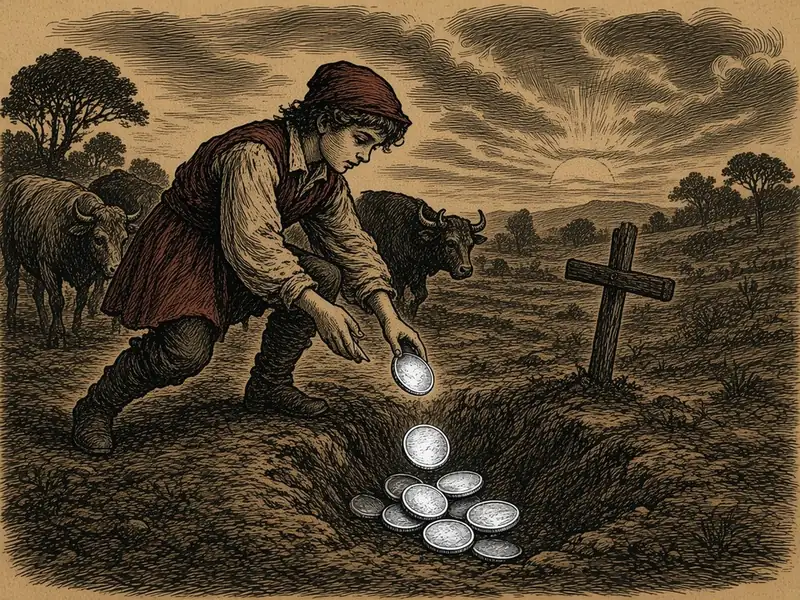
The morning after the first secret burial, a boy found Viking silver shining in the sand.
In 1611 William Blundell of Little Crosby, a Catholic, fenced off a piece of his land called the Harkirk as a burial ground, because recusants could not be buried at Sefton church. The first burial, of an old tenant named William Mathewson, took place on 7 April 1611. The next morning a fourteen-year-old servant boy, Thomas Ryse, found pieces of silver coin scattered in the sand thrown up from the ditch. The family searched and found 'above fower schore' (80) coins. Blundell drew 35 types. Sefton Council says this was a hoard of Anglo-Saxon, Viking and Continental coins, now lost. The name Harkirk means 'grey church' in Old Norse.