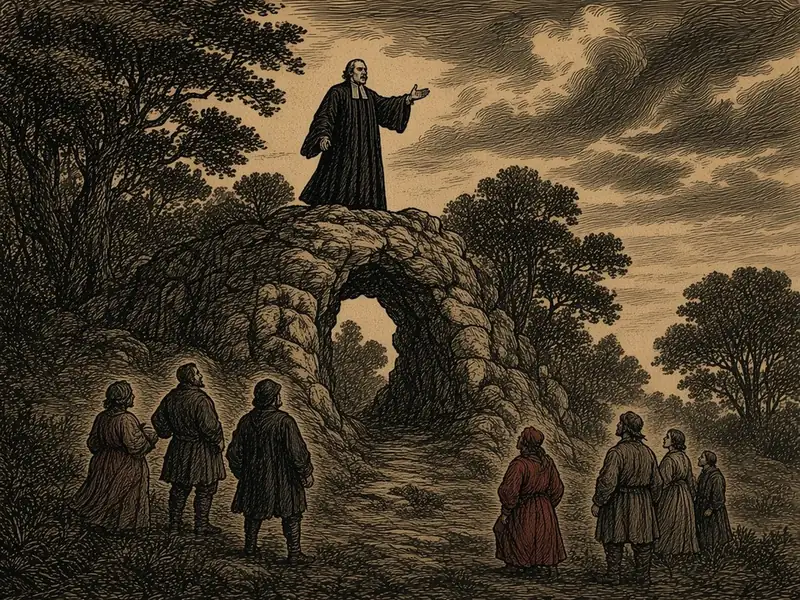
A bundle of damp cloth from London, and a village that chose to shut itself in.
In 1665 a bundle of cloth from London reached the Eyam tailor Alexander Hadfield. His assistant George Viccars opened it and soon died, and plague spread through the village. Led by the rector William Mompesson and his predecessor Thomas Stanley, the villagers agreed to quarantine themselves. Neighbours left supplies at marked stones, and villagers left money in holes filled with vinegar. Families buried their own dead near their homes, and services were held outdoors at Cucklet Delf. Over fourteen months, at least 260 people died. A memorial service is still held at Cucklet Delf each August.